





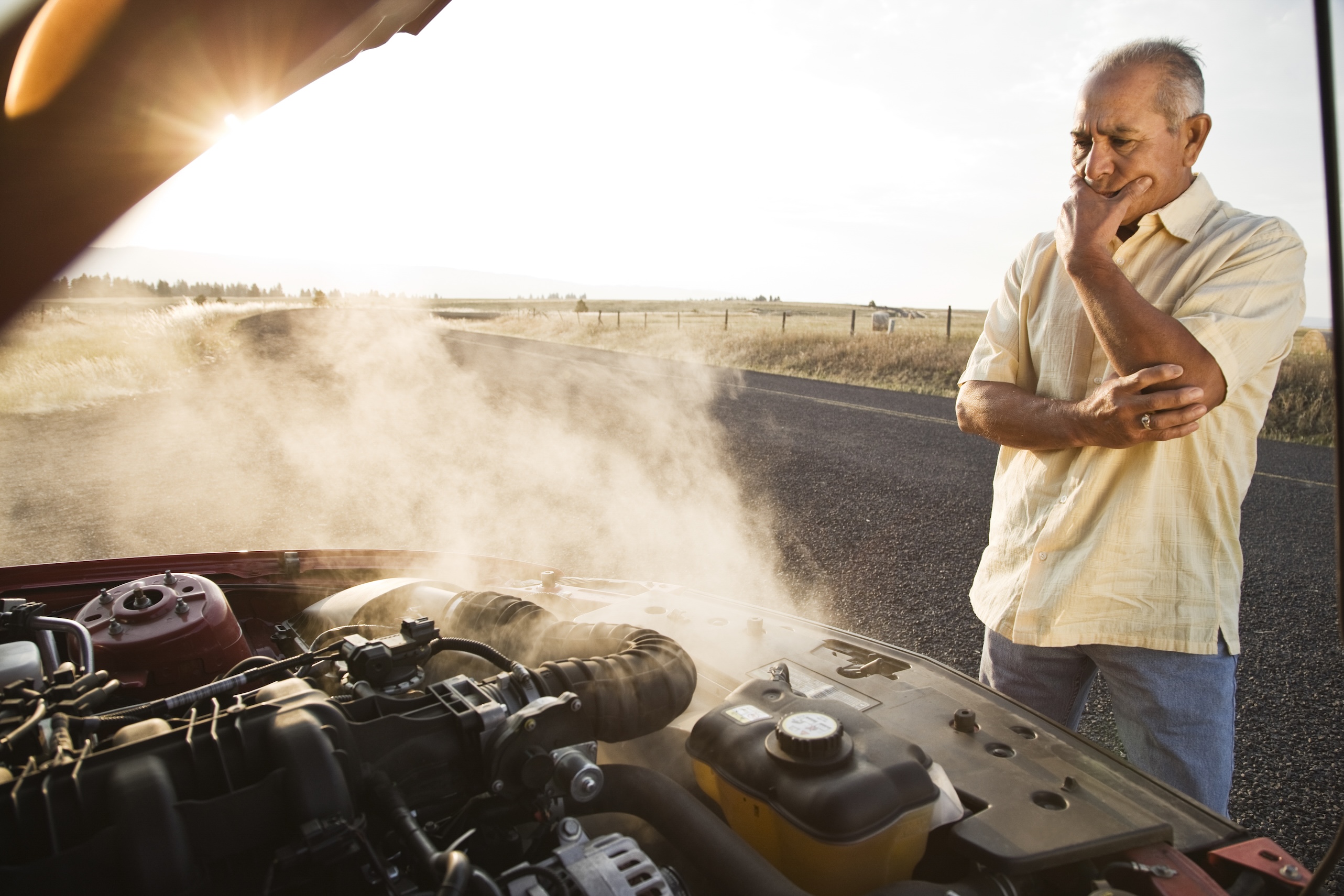
Phoenix summers are not gentle on vehicles. When temperatures climb past 100 degrees and start pushing 110 or higher, your cooling system has a big job to do. It must keep the engine operating at the right temperature while your vehicle sits in traffic, moves through long freeway commutes, and bakes in parking lots.
If the cooling system is already weak, Arizona heat can turn a small issue into a serious problem quickly. In this month’s blog, we examine how to ensure your cooling system is ready for the hot Arizona weather.
Why the Cooling System Matters
Your cooling system does more than prevent overheating. It helps regulate engine temperature, protect internal engine parts, and keep your vehicle running reliably.
The system includes several parts working together, including coolant, radiator, hoses, thermostat, water pump, radiator cap, and cooling fans. If one part is not doing its job, the whole system can struggle.
On a mild day, a small problem may not be obvious. On a 110-degree day in Phoenix traffic, that same problem can leave you stuck on the side of the road.
Common Cooling System Problems
Some cooling system issues are easy to spot, while others build slowly over time. In our shop, we commonly see problems such as:
- Low coolant levels
- Old, dirty, or contaminated coolant
- Cracked, soft, or swollen hoses
- Loose or worn hose clamps
- Leaking water pumps
- Clogged or restricted radiators
- Faulty thermostats
- Weak radiator caps
- Cooling fans that do not turn on properly
Even a small coolant leak can become a big deal in extreme heat. When coolant levels drop, the system cannot move heat away from the engine as effectively.
Warning Signs to Watch For
Overheating does not always happen suddenly. Many times, your vehicle gives you warning signs first.
Pay attention if you notice:
- Temperature gauge running higher than normal
- Gauge rising at stoplights, then dropping while driving
- Sweet coolant smell near the vehicle
- Coolant spots or puddles underneath
- Steam coming from under the hood
- Dashboard warning lights
- Coolant level dropping between services
- Heater or air conditioning performance changing
If the temperature gauge starts climbing, do not ignore it. Continuing to drive while the engine is overheating can lead to serious damage.
Practical Tips Before the Heat Peaks
A few simple steps can help reduce the risk of cooling system trouble during Phoenix summer.
- Have your coolant level and condition checked. Coolant should be clean and at the proper level. If it is old, dirty, or the wrong mixture, the system may not protect the engine as well as it should.
- Inspect hoses and belts. Heat can make rubber parts dry, crack, soften, or swell. Replacing worn parts early is usually much easier than dealing with a breakdown later.
- Check for leaks. Coolant leaks may show up as puddles, crusty residue, or a sweet smell. Small leaks should be repaired before they get worse.
- Make sure the cooling fans work. This is especially important for stop-and-go driving, where airflow through the radiator is limited.
Never open a hot radiator cap. The cooling system is under pressure, and hot coolant can cause serious burns.
Get Ahead of the Heat
Phoenix heat is tough on every vehicle, but a little preparation goes a long way. A cooling system inspection can help identify small issues before they become expensive repairs.
If your vehicle has not had a cooling system check recently, now is a good time to schedule one. Contact the service professionals at Bell Road Automotive for a full inspection of your vehicle’s cooling system.